Treatment at Well Bath
Structural Integration in Bath
Where the pattern lives, not where you feel it
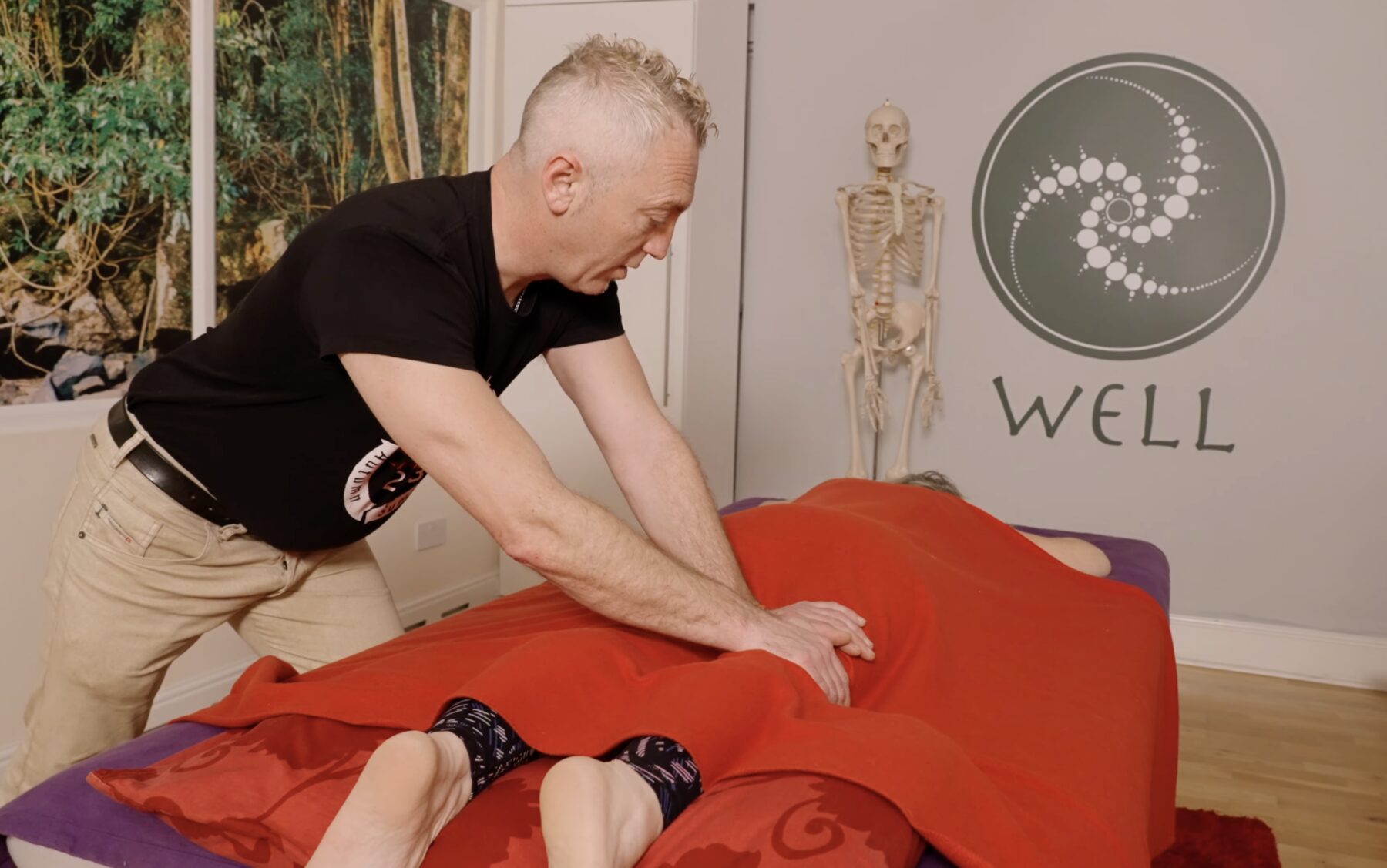
You lie on the couch. Paul reads your standing shape before he touches you, then works with the fascia that has adapted to years of a life. A Structural Integration session focuses on the body and gravity. The work sits inside a sequence of ten designed by Dr Ida Rolf to create rapid, tangible change. Each session builds on the last, with visible or felt physical shifts alongside frequent changes in thinking, feeling, and function. Pains and dysfunctions often dissolve along the way.
This work interfaces with the non-conscious system that manages a person's relationship to gravity. When balance is achieved, energy is freed to be used elsewhere in life.
Paul has practised the modality for many years. His work reads the whole body rather than the isolated complaint, and often finds material in tissue clients did not think was relevant.
Watch
Duration
45 minutes
Price
See the booking page for current pricing.
What people bring
Presentations commonly worked with
Structural Integration reads the whole body rather than the site of pain. What arrives in the room and what the work meets often turn out to be different things.
- Chronic low back pain that has not resolved through massage or physio
- Neck and upper-back holding patterns from long hours at a screen
- Postural imbalance visible in gait, shoulders, or pelvis
- Restricted breath and diaphragm patterns
- Old injury sites where the surrounding fascia has adapted around the trauma
- Recurrent injuries in the same joint or muscle group
- Stiffness after long-distance sitting, driving, or standing
- A general sense of being physically inefficient in the body
Structural Integration is a bodywork practice, not a medical treatment. Anything acute, undiagnosed, or systemic should see a physician first.
What a session is like
From arrival to the last breath in the room
A first Structural Integration session with Paul runs seventy-five minutes when you include the intake and the after. This is what happens between arrival and departure.
- 01
Arrival and tea
Come through the front door into the foyer, take a herbal tea from the Welsh dresser, and sit for a moment. Paul will collect you when he is ready.
- 02
Intake conversation
Paul asks a few questions about what has drawn you to the work. Where the body has been, injuries, surgeries, what has been asked of it. He is reading for the whole pattern across the body.
- 03
Standing assessment
Before he lays a hand on you Paul reads your standing posture, breath, and small movements. Photographs are sometimes taken for reference across the ten-series.
- 04
On the table
You undress to your underwear and lie on the table under a sheet. Only the area being worked is exposed. Paul works fascia layer by layer following the tension lines rather than the site of pain. Sessions have a specific structural theme within the ten-series.
- 05
Movement re-education
Paul may ask you to stand, walk, or breathe partway through so the body integrates the shift while still in the session. This part is where you feel the change most clearly.
- 06
Integration and water
Time to sit up slowly, drink water, and notice. Paul will speak briefly about what he found and what to expect over the next forty-eight hours.
- 07
Whether to book the next in the series
The ten-series is designed to be taken sequentially. Paul will let you know whether he thinks the next session should be soon or spaced. Individual sessions are also welcome.
Weighing it up
Structural Integration versus deep-tissue massage
Both reach into deep tissue. The framework, the sequence, and the intention behind the touch are the parts that separate them.
| Structural Integration | Deep-tissue massage | |
|---|---|---|
| Framework | Whole-body fascial reorganisation in relation to gravity. Designed by Dr Ida Rolf. | Musculoskeletal. Local muscle-and-fascia work at the site of complaint. |
| Sequence | Ten-series. Each session builds on the previous one across weeks or months. | Session-by-session. Booked as needed for a particular area. |
| Where the work goes | Along the whole fascial line. Often finds material far from the site of pain. | Where it hurts. Direct into the muscle or knot presenting. |
| Pre-touch reading | Standing posture, gait, breath, sometimes photographs across the series. | Physical assessment of the affected area. |
| Movement work | Woven in. You stand, walk, or breathe partway through to integrate the shift. | Not usually part of the session. |
| Best if you | Have a whole-body pattern that has not resolved with local work. | Have a specific muscle problem you want directly addressed. |
This is a framing guide held with both as equally real. Paul will steer you honestly if he thinks another approach would serve you better.
What the evidence says
Research and clinical literature
Structural Integration has a peer-reviewed evidence base, mostly focused on chronic pain, posture, and autonomic function. These are the sources most often cited.
-
A randomised trial of Structural Integration for chronic low back pain reported clinically meaningful pain reduction and functional improvement compared with a control group.
Journal of Alternative and Complementary Medicine · Jacobson · 2011
-
Earlier research measured changes in pelvic inclination and increases in parasympathetic tone following Rolfing soft-tissue manipulation, suggesting an autonomic-nervous-system effect alongside the structural one.
Physical Therapy · Cottingham, Porges, Richmond · 1988
-
Structural Integration is included as a distinct modality in reviews of manual therapy for chronic musculoskeletal pain, though authors call for more high-quality trials.
Complementary Therapies for Physical Therapy · Deutsch & Anderson · 2008
Questions people ask
Before you book
Do I need to undress? +
Will it hurt? +
What is the ten-series? +
Do I have to do all ten? +
How is this different from deep-tissue massage? +
Is it safe if I have injuries or a medical condition? +
How long between sessions? +
Do I need to be flexible or fit for this? +
Can I book this alongside Quantum Structural Integration? +
Other work by the same hands
Also with these practitioners
Quantum Structural Integration in Bath
Paul's own longer session. For deeper structural and nervous-system work.
QSI Six-Month Course in Bath
Paul's full Quantum Structural Integration Ten Series woven with five retreats. Six months, held at Well Bath.
Deep Transformation Retreat in Bath
A one-day integration journey with Paul. Morning ceremony, afternoon workshop, optional 1-to-1.
Whole System Reboot Retreat in Bath
Paul's one-day journey for when momentum is finally moving. Morning ceremony, afternoon workshop.
If you are arriving from
Structural Integration in Bath tends to be met by people carrying
Book
Book Structural Integration in Bath
Booking runs on Acuity, direct link below. If you are not sure whether structural integration in bath is the right fit, reach out and we will help you find the right first door into the sanctuary.
Prefer to talk it through first? Call Joe on 07986 380327 · Joe will get back to you within 24 hours.
Silo of the sanctuary
Also held at Well Bath
Quantum Structural Integration
Paul's own longer session. For deeper structural and nervous-system work.
QSI Six-Month Course
Paul's full Quantum Structural Integration Ten Series woven with five retreats. Six months, held at Well Bath.
Deep Transformation Retreat
A one-day integration journey with Paul. Morning ceremony, afternoon workshop, optional 1-to-1.