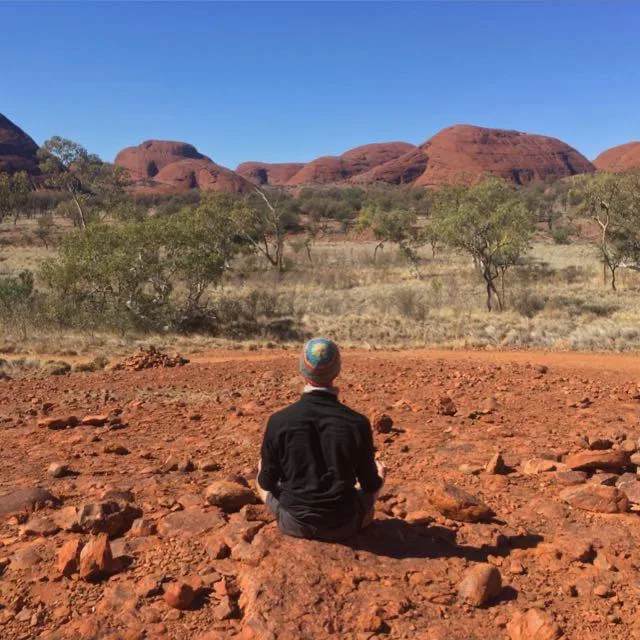
Workshop at Well Bath
Resilience Meditation
Meditation that survives real life
You sit. Tom begins simply. The point is not stillness; the point is what stillness is training you to carry. Resilience Meditation is Tom's own form. It draws on contemporary understanding of the nervous system as well as the older contemplative traditions. The intention is to build a practice that survives real life rather than one that only holds in the retreat room.
The evening is structured around short, repeatable exercises that people can carry into their working week. There is teaching, there is practice, and there is time to ask questions. Practical rather than mystical in tone, and held once a month.
Tom teaches from the assumption that a meditation practice should make the rest of the week easier rather than harder. The techniques are chosen for their transferability — you leave with something you can actually use on the walk to work.
Duration
75 minutes
Price
See the booking page for current pricing.
What people bring
Presentations commonly worked with
The workshop is a container for building a sustainable practice. What people arrive with is usually a nervous system running on effort and a wish for a portable tool.
- Anxiety that is affecting sleep, focus or general functioning
- Chronic stress from a demanding working life
- A meditation practice that keeps starting and stopping
- Curiosity about meditation without wanting a religious framework
- Return to practice after a long gap
- Wanting evidence-based techniques rather than mystical framing
- Recovery from burnout when the nervous system needs proper reset tools
This is a group workshop rather than a therapeutic session. If you are working with acute trauma or severe anxiety, meditation can occasionally intensify symptoms before it helps — speak with your GP or a trauma-informed clinician before starting a practice, and mention it to Tom on arrival.
What a session is like
From arrival to the last breath in the room
The evening runs seventy-five minutes on the second Saturday of the month. This is how the time is used.
- 01
Arrival
Front door, tea from the Welsh dresser, into the studio. Cushions and chairs both available — sit however lets you settle.
- 02
Tom opens
A short welcome, a note on the shape of the evening, an invitation to name what you are hoping to leave with. Practical rather than ceremonial in tone.
- 03
Teaching
Ten to fifteen minutes of teaching on the specific technique for the evening — often something short, portable, and grounded in nervous-system science.
- 04
First practice
The technique practised in the room together, guided by Tom. Short enough to hold; long enough for the effect to register.
- 05
Question and answer
Time to ask about what came up. Tom answers directly. This is often where the practical piece gets bedded in.
- 06
Longer sit
One longer sit — usually fifteen to twenty minutes — to feel the technique in a fuller container. A soft close and a note on carrying the work into the week.
Weighing it up
Resilience Meditation versus a Sound Bath
Two of the calmer evenings on the schedule. If you are choosing, this is what changes.
| Resilience Meditation | Sound Bath | |
|---|---|---|
| Your role | Active — you are learning a technique to use. | Receptive — you lie down and let the sound work. |
| Register | Practical, evidence-informed, teaching-led. | Contemplative, restorative, sound-led. |
| What you leave with | A portable tool for the working week. | A settled body and a slower Friday evening. |
| Cadence | Monthly, second Saturday. | Monthly, on Friday evenings. |
| Best if you | Want to build a sustainable practice. | Want to be undone for an evening. |
Some regulars come to both across a month. Tom teaches the technique; Kate holds the settling.
What the evidence says
Research and clinical literature
Short-form meditation practices have a substantial evidence base for anxiety, sleep, and nervous-system regulation.
-
Meta-analysis of mindfulness-based interventions shows moderate-to-large effect sizes for reductions in anxiety, depression and perceived stress across diverse adult populations.
JAMA Internal Medicine · Goyal et al. · 2014
-
Short daily meditation practice — as little as ten minutes — produces measurable reductions in cortisol and improvements in sleep quality within eight weeks.
Psychoneuroendocrinology · reviews · 2019
-
Brief, portable meditation techniques show higher adherence and long-term retention than longer-format practices in observational cohorts.
Mindfulness · reviews · 2020
Questions people ask
Before you book
I have tried meditation and it did not work. +
Is this religious? +
How often is it held? +
Can I use my class pass? +
Will I have to talk about my feelings? +
What do I need to bring? +
I have significant trauma history. Is this the right first door? +
If you are arriving from
Resilience Meditation tends to be met by people carrying
Book
Book Resilience Meditation
Booking runs on Acuity, direct link below. If you are not sure whether resilience meditation is the right fit, reach out and we will help you find the right first door into the sanctuary.
Prefer to talk it through first? Call Joe on 07986 380327 · Joe will get back to you within 24 hours.
Silo of the sanctuary