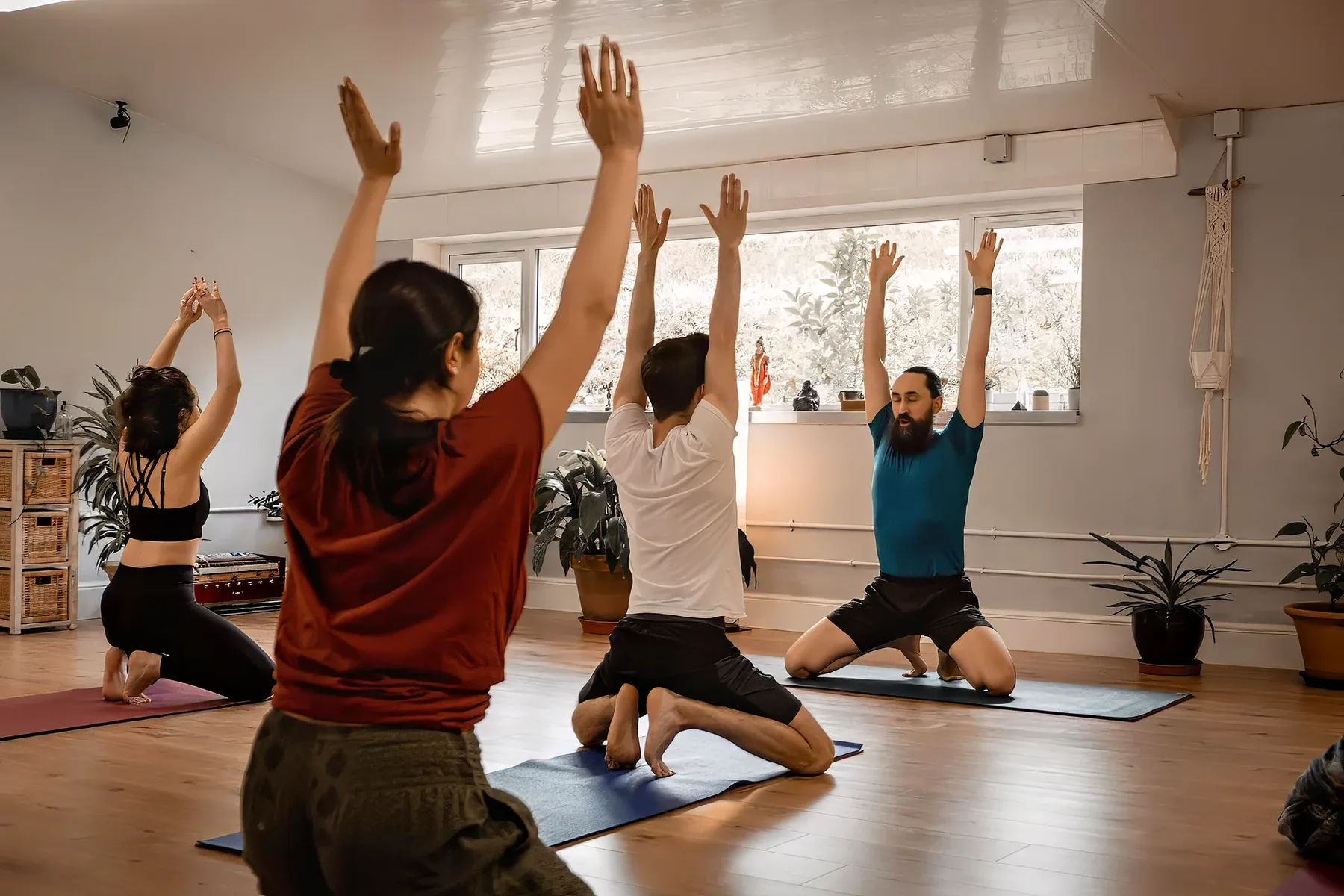
Class at Well Bath
Prana Kriya Yoga
Breath as the way in
“Everything we do is always about something else outside of yourself, or for someone else. This is the only thing that is just for you, and just about you.”
Breath first. You feel it before you hear it. Movement follows breath, and stillness carries what the practice has moved. Prana Kriya Yoga is Joe's foundational class at Well Bath, drawn from his time with Yogi Ashokananda in the Himalayan tradition.
The class uses breath and movement to direct prana (life-force energy) into specific areas of the body, bringing balance to the endocrine and chakra system and helping to reset the nervous system. As the practice progresses you move through sensations in the body toward a point of stillness, feeling into the more subtle energy of being. Less doing, more feeling and being.
The class works at every level. Newer students find the pace unhurried enough to learn from; experienced students find the depth in the pranayama and the contemplative rest.
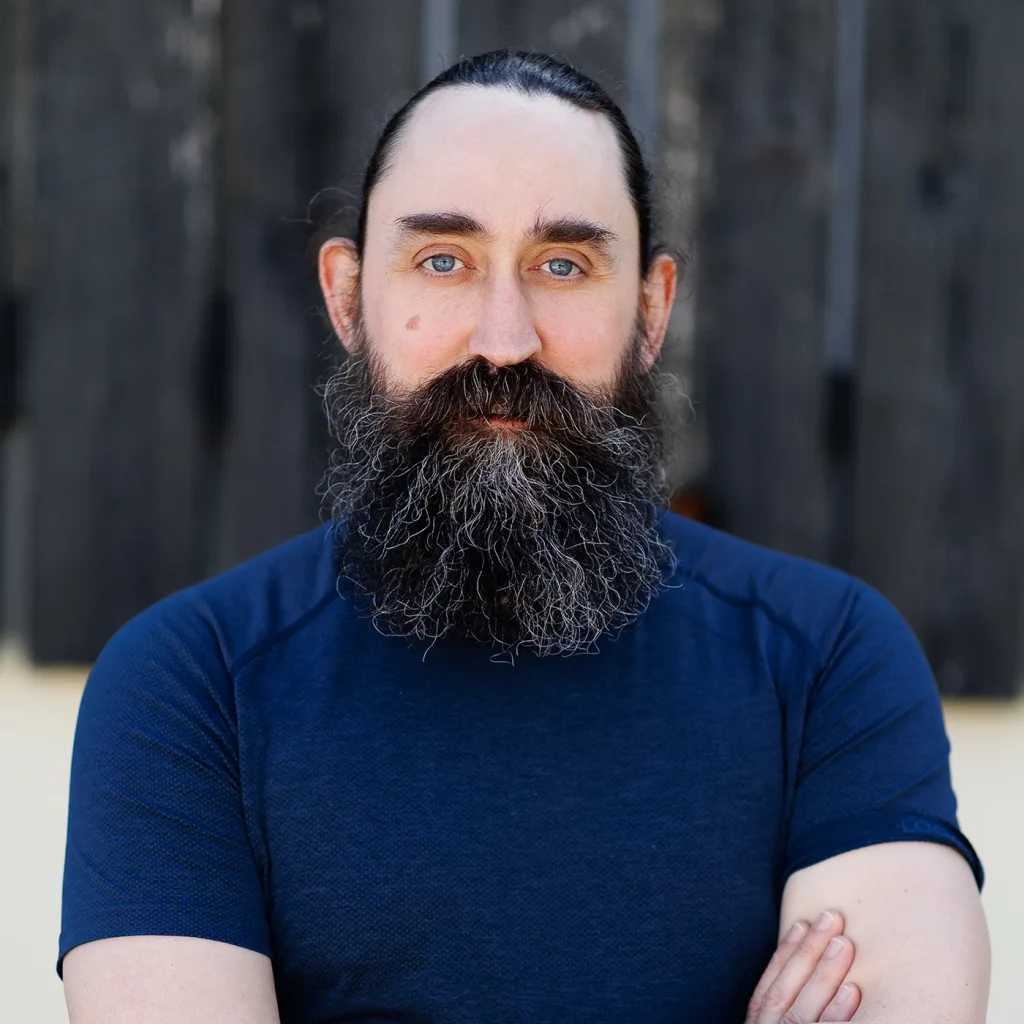
Watch
Duration
105 minutes
Price
See the booking page for current pricing.
What people bring
Presentations commonly worked with
Prana Kriya is Joe's foundational practice at Well Bath, drawn from his training with Yogi Ashokananda in Tiruvannamalai. It works with breath, subtle-body technique and long stillness. People arrive with all sorts of things asking to be met by it.
- Chronic stress the nervous system has been holding at a low simmer
- Sleep that arrives shallow and leaves at three in the morning
- A restless mind that follows you into the day
- Fatigue no amount of rest resolves
- Grief or heaviness that has moved from acute into background
- A yoga practice that has become physical only and is asking for more
- Curiosity about pranayama and the deeper energetic side of the tradition
- Long-standing meditators looking for a moving bridge into stillness
This is a subtle-body practice, not a clinical intervention. Prana Kriya is not a substitute for medical treatment of clinical anxiety, depression or physical illness. If you are under care of any kind, mention it to Joe on arrival so the practice can meet where you actually are.
What a session is like
From arrival to the last breath in the room
Prana Kriya at Well Bath runs 105 minutes. Slower and longer than most yoga classes, and the shape below is what the time gets used for.
- 01
Arrival and tea
Come through the front door, take a tea from the Welsh dresser, and sit in the foyer for a few minutes. The class starts on time so a settled arrival ten minutes early is ideal.
- 02
Opening
Joe leads a brief seated centring. Not a lecture, a few sentences to bring attention inward and to name what the practice is about to do.
- 03
Warm-up of body and breath
Gentle joint mobility, breath awareness, and enough movement to bring the body from arrival state into practice state. Ten to fifteen minutes.
- 04
Pranayama sequence
The main technical piece. Joe teaches specific breath patterns that draw prana up and down through the central channel. Ratios of inhale to hold to exhale, use of bandhas and mudras where relevant. This is the part that separates Prana Kriya from most yoga classes.
- 05
Kriya work
Where the breath meets the subtle body. Sometimes spontaneous movements arise (a shudder, a mudra forming in the hands, a wave of heat). Joe teaches that these are welcome and to be allowed rather than performed.
- 06
Sustained stillness
Fifteen to twenty minutes of held silent sitting. This is where the practice lands. Not another warm-up, this is the point. Cushions and back support available for anyone who wants them.
- 07
Integration
Brief closing, sometimes a short reading, sometimes silence. Sit or lie down for as long as you need before you gather yourself and go.
The striving to arrive somewhere ends and you're just there, present and centred.
Paul Fairhurst, after a Prana Kriya class
Weighing it up
Prana Kriya versus a standard Vinyasa or Hatha class
Prana Kriya is a yoga class in the wide sense but the shape and priority are different from most modern yoga. If you are weighing it against a Vinyasa flow or a Hatha class, this is what changes.
| Prana Kriya | Standard Vinyasa or Hatha | |
|---|---|---|
| Centre of gravity | Pranayama and kriya. The breath and its subtle effects lead. Asana serves the breath. | Asana. The physical posture leads. Breath is aligned to the shape. |
| Pace | Unhurried. Long held sections. More sitting than in most yoga. | Continuous flow or steadily-held postures. |
| Duration | One hour forty-five minutes, deliberately. | Sixty to seventy-five minutes typically. |
| Depth of interior work | The interior is the point. The practice is designed to reach it directly. | Interior work is available if you know how to look, but it is not the explicit teaching. |
| Physical intensity | Moderate. Real work, but sustainable. | Varies from gentle Hatha to strong Vinyasa. |
| Best if you | Want breath, subtle body and stillness to be the main event. | Want the practice to keep the body moving and the mind occupied throughout. |
Neither is better. Different practices for different needs. Many people find their week works well with one of each.
What the evidence says
Research and clinical literature
Pranayama-led yoga has a growing evidence base for stress, mood and autonomic-nervous-system effects. Prana Kriya specifically has less peer-reviewed literature than Sudarshan Kriya or Iyengar work, so references below are for adjacent practices with the same underlying mechanism.
-
Systematic reviews of yoga interventions for adults with anxiety report meaningful reductions in symptom severity versus usual care, with pranayama-inclusive practices showing the stronger effect.
Depression and Anxiety · Cramer, Lauche, Anheyer et al. · 2018
-
Pranayama-heavy programmes (specifically Sudarshan Kriya) have shown reductions in perceived stress and improvements in sleep quality across randomised trials, though study quality varies.
International Journal of Yoga · Zope and Zope · 2013
-
Slow-breath practices measurably shift the autonomic balance toward parasympathetic dominance, reflected in heart-rate variability increases. The mechanism supports the reported nervous-system-reset effect of a Prana Kriya class.
Frontiers in Human Neuroscience · Zaccaro et al. · 2018
Being energised and stimulated by his Prana Kriya class. An inspirational and nutritious man to be around.
Adrian Chivers, Prana Kriya regular
Questions people ask
Before you book
Do I need yoga experience? +
Do I need to know the language or the mantras? +
How is this different from meditation? +
Will I get physically tired? +
What if I fall asleep in the stillness? +
Can I come pregnant? +
How often should I come? +
What do I wear or bring? +
Do I need to sit cross-legged? +
Other work by the same hands
Also with these practitioners
Introductory Wellness Evaluation
A one-to-one conversation with Joe. Where you are, what might meet you, what to try first.
Yin Yoga
Ground-level, long-held postures. Restorative rather than active.
Tui Na in Bath
An ancient healing art, over 2000 years old. Joe trained under Errol Lynch.
Shamanic Breathwork
A longer session with Joe. For those ready to move through something using breath.
Men's Fire Circle
A monthly gathering. Joe and Robby the fire keeper. A place to speak or to sit in silence.
Cupping in Bath
A traditional companion to Tui Na. Held by Joe.
Hot Stone Massage in Bath
Warm basalt stones held into the body. Held by Joe.
Himalayan Hatha Yoga
Joe's traditional Hatha class. Steady, held, and grounded.
Breath and Bhajans
Joe's weekly class pairing breathwork with devotional chanting.
I Ching Consultation
Joe consults the ancient Book of Changes as an oracle in a one-to-one session.
Therapeutic Yoga 1-to-1
Joe's private yoga session tuned to the specific body in the room.
Classical Astrology Reading
A one-to-one classical astrology reading with Joe. Bring your date, time, and place of birth.
Book
Book Prana Kriya Yoga
Booking runs on Acuity, direct link below. If you are not sure whether prana kriya yoga is the right fit, reach out and we will help you find the right first door into the sanctuary.
Prefer to talk it through first? Call Joe on 07986 380327 · Joe will get back to you within 24 hours.
Silo of the sanctuary